Gluconara ingredients
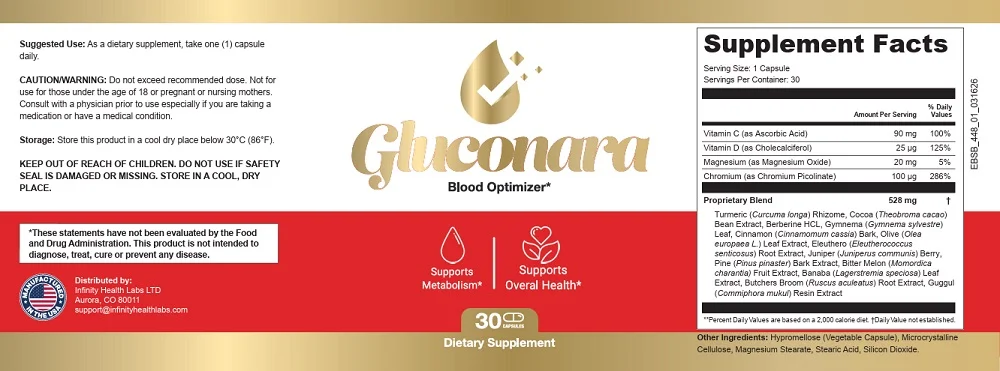
Gluconara contains 13 active ingredients per serving: four individually dosed vitamins and minerals plus a 528 mg proprietary botanical blend. Each bottle contains 30 vegetable capsules, and the suggested use is one capsule daily with water.
Below is the complete supplement facts breakdown, including what each ingredient does and the clinical evidence supporting its inclusion. See how these ingredients translate into benefits.
Individually dosed vitamins and minerals
Each Gluconara capsule provides four individually quantified nutrients with established roles in metabolic and blood sugar health.
1. Vitamin C (as ascorbic acid): 90 mg (100% DV)
Vitamin C is an antioxidant that helps protect cells from oxidative stress. People with blood sugar concerns often experience higher oxidative stress, so antioxidant support can be a useful complement to metabolic health.
Gluconara provides 90 mg of Vitamin C per serving, which is the full Daily Value for most adults.
2. Vitamin D (as cholecalciferol): 25 mcg (125% DV)
Vitamin D plays a role in insulin sensitivity and overall metabolic health. Low Vitamin D levels have been associated with impaired glucose metabolism in some studies.
Gluconara includes 25 mcg of Vitamin D, providing 125% of the Daily Value.
3. Magnesium (as magnesium oxide): 20 mg (5% DV)
Magnesium is involved in over 300 enzymatic reactions, including those related to glucose metabolism and insulin action. Adequate magnesium intake is associated with better insulin sensitivity.
Gluconara includes 20 mg of magnesium per serving.
4. Chromium (as chromium picolinate): 100 mcg (286% DV)
Chromium is an essential trace mineral that enhances the action of insulin and supports carbohydrate, fat, and protein metabolism. Chromium picolinate is one of the most studied forms for blood sugar support.
The Office of Dietary Supplements at the NIH provides a comprehensive overview of chromium's role in human health. Gluconara delivers 100 mcg per capsule, well above the Daily Value.
Proprietary botanical blend: 528 mg
The Gluconara proprietary blend contains 13 botanical extracts. Individual amounts within the blend are not disclosed. The following describes each ingredient and the research supporting its inclusion.
5. Berberine HCl
Berberine is a plant alkaloid that has been extensively studied for its effects on blood glucose and insulin sensitivity. Research suggests it may help lower fasting blood glucose and improve lipid profiles.
See Zhang H. et al., Metabolism, 2010.
6. Cinnamon bark
Cinnamon has been shown in meta-analyses to be associated with lower fasting blood glucose. It may also support healthy insulin sensitivity.
See Davis P.A. & Yokoyama W., Journal of Medicinal Food, 2011.
7. Gymnema sylvestre leaf
Gymnema sylvestre is an herb traditionally used in Ayurvedic medicine to support healthy blood sugar and reduce sugar cravings. It may also support insulin production.
See Kumar S.N. et al., Journal of Dietary Supplements, 2010.
8. Bitter melon fruit extract
Bitter melon contains compounds that may mimic insulin and support glucose uptake by cells. It has been studied for its effects on type 2 diabetes.
See Kim S.K. et al., Complementary Therapies in Medicine, 2020.
9. Banaba leaf extract
Banaba leaf contains corosolic acid, which has been studied for its effects on glucose transport and blood sugar regulation.
See Miura T. et al., Journal of Nutrition and Metabolism, 2012.
10. Turmeric rhizome
Curcumin, the active compound in turmeric, has anti-inflammatory and antioxidant properties. Research suggests it may support metabolic health.
See Zeng Y. et al., Frontiers in Pharmacology, 2023.
11. Cocoa bean extract
Cocoa bean extract provides flavonoids that support cardiovascular health and may have beneficial effects on insulin sensitivity.
12. Olive leaf extract
Olive leaf extract contains oleuropein, a compound with antioxidant and anti-inflammatory properties that may support metabolic health.
13. Eleuthero root extract
Eleuthero, also known as Siberian ginseng, is an adaptogen traditionally used to support energy and stress resilience.
14. Juniper berry
Juniper berry has a history of traditional use for digestive and metabolic support.
15. Pine bark extract
Pine bark extract is rich in proanthocyanidins, antioxidant compounds that support vascular health and may help protect against oxidative stress.
16. Butcher's broom root extract
Butcher's broom has traditionally been used to support circulation and vascular health.
17. Guggul resin extract
Guggul is a resin from the Commiphora mukul tree, traditionally used in Ayurvedic medicine to support metabolism and healthy cholesterol levels.
Other ingredients
Gluconara capsules also contain vegetable capsule, microcrystalline cellulose, magnesium stearate, stearic acid, and silicon dioxide.
Why the Gluconara formula matters
Gluconara combines individually dosed vitamins and minerals with a broad botanical blend. This multi-ingredient approach targets several pathways involved in blood sugar regulation, including insulin sensitivity, glucose uptake, craving control, and antioxidant defense.
The formula is stimulant-free and manufactured in the United States in an FDA-registered, GMP-certified facility. Read our full Gluconara review or view discounted packages.
Ready to try Gluconara?
Every order is backed by the 60-day satisfaction guarantee.
Get Gluconara todayFrequently asked questions about Gluconara ingredients
What are the main ingredients in Gluconara?
Gluconara contains Vitamin C, Vitamin D, Magnesium, Chromium, and a 528 mg proprietary blend of 13 botanical extracts including Berberine, Cinnamon, Gymnema sylvestre, Bitter Melon, and Banaba Leaf.
Is Gluconara made with natural ingredients?
Gluconara uses vegetable capsules and plant-based extracts. It contains no stimulants or artificial additives.
How much chromium is in each serving?
Each capsule provides 100 mcg of chromium as chromium picolinate, which is 286% of the Daily Value.
Are the ingredients backed by clinical studies?
Yes. Key ingredients such as Berberine, Cinnamon, Chromium, Gymnema sylvestre, Bitter Melon, and Banaba Leaf are supported by peer-reviewed studies. References are listed above.